Bridges In Ronda Spain: The Details
Ronda is one of the most beautiful Spanish villages and a popular day trip from Benalmádena and the Costa del Sol. One of the main things that Ronda is known for are its bridges. There are three main bridges in Ronda, Spain that span the El Tajo gorge and the Guadalevín. Scroll down to learn more about these unique bridges and make sure you add seeing them to your one day itinerary for Ronda.
All pictures are taken by me and cannot be used without my permission. This post may contain affiliate links which means I may earn a very small commission (at no extra cost to you) if you make a purchase. Your support helps me continue doing what I love & creating travel guides for free. It’s very much appreciated 🙂
Puente Nuevo (New Bridge)
First up is the Puente Nuevo – the new bridge, spanning 68 meters wide and 120 meters above the Guadalevín River. If you’ve seen pictures of Ronda, they most likely showcase this bridge. To some, it’s known as the ‘soul of the city’ because it connects the two sides of the city. It’s the largest and most famous bridge of the three bridges in Ronda and it’s also the last to be constructed.
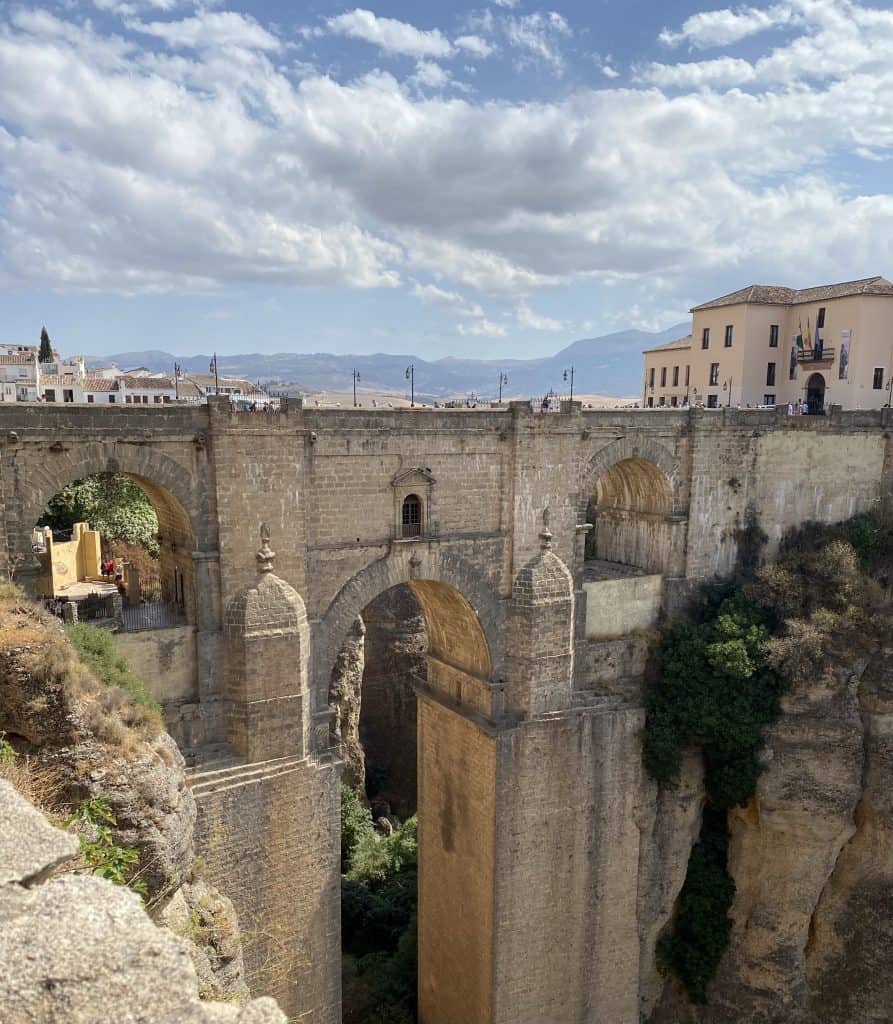
After a second attempt at building the bridge started in 1759, Puente Nuevo was officially completed in 1793. So calling it ‘the new bridge’ is a little bit ironic because it is, in fact, very old. The bridge is wide enough for pedestrians and cars to travel across. It can become quite busy with traffic and many tourists but it is a great chance to enjoy the views. Make sure you check out the views from the bridge on both sides. The views are completely different but equally impressive.
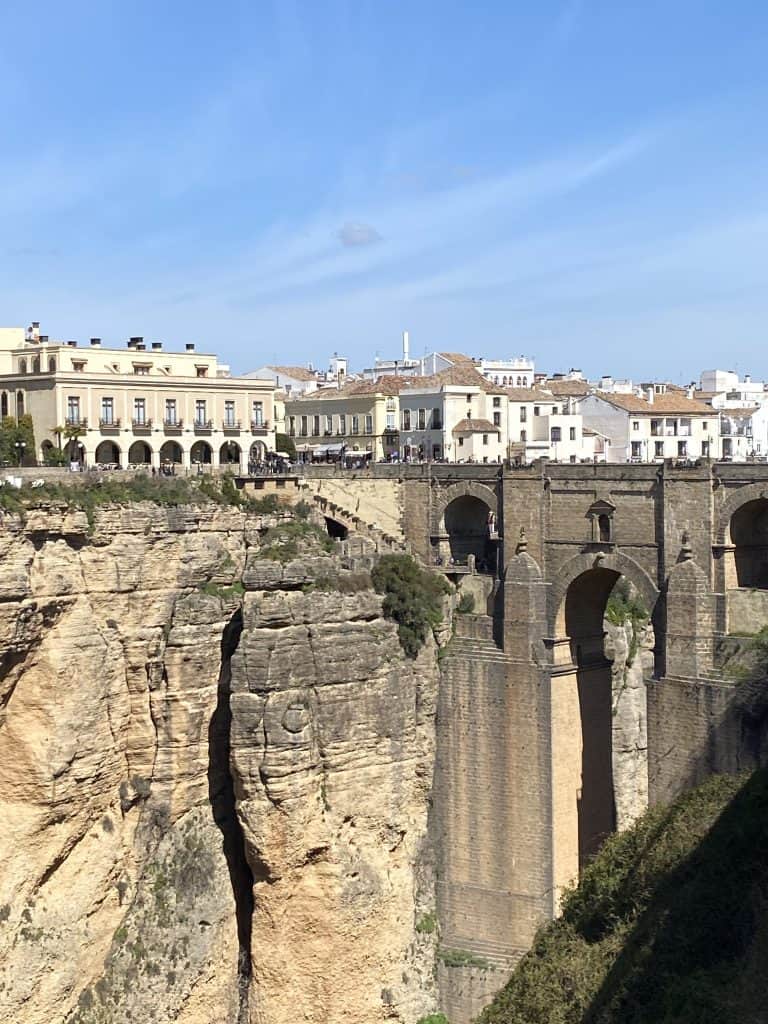
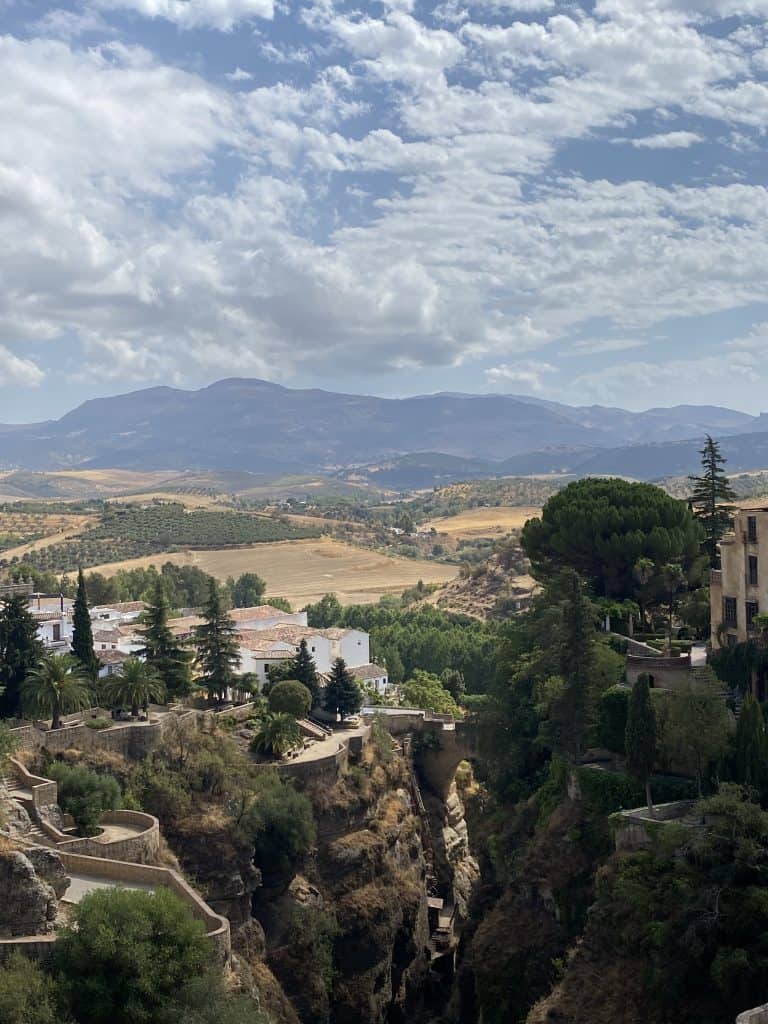
At first glance, you might not even notice that there are rooms within the bridge, But if you look closely, you can see a little window and some doors within the columns and pillars of the bridge. At one point, these rooms held prisoners. In current day, there’s a small museum you can visit within the bridge walls. If you’re interested in learning more about how the bridge was built and the engineering feat this was, visiting this museum is a great option.
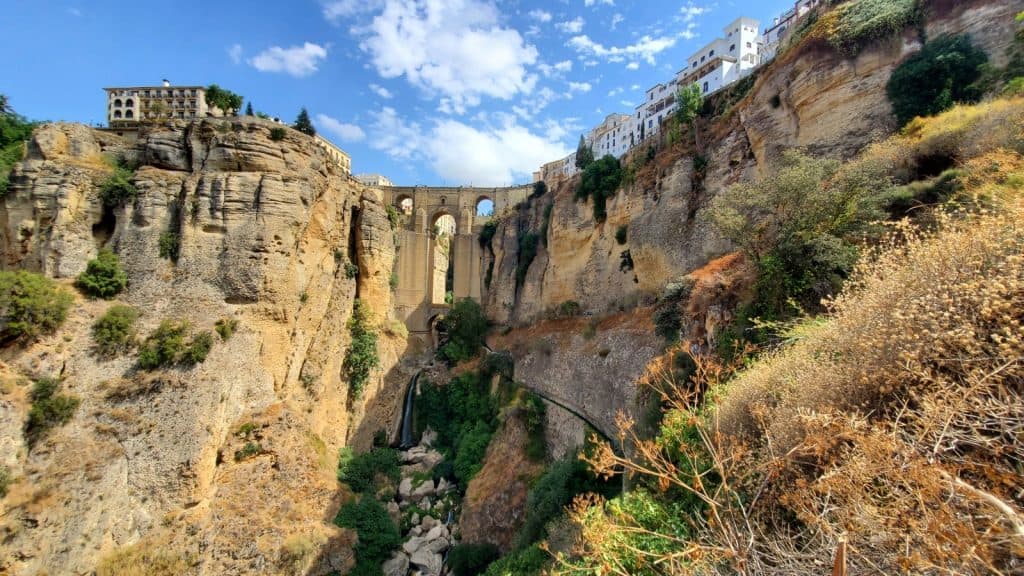
Travel Tip: If you want another place to view the Puente Nuevo bridge from without as many tourists, you can visit Casa Museo Don Bosco. They have a garden with viewing deck. You can learn more about Casa Museo Don Bosco in my guide – One Day Itinerary in Ronda, Spain.
Puente Viejo (Old Bridge)
Puente Viejo is referred to as the old bridge in Ronda. Construction was initiated because the Puente Romano (see below) was not wide enough for carts to get through. The building of this bridge was completed in 1616. That’s what makes it such a beautiful bridge to walk across. You can feel the history in its dense cobblestone, stone walls, iron gates, and large stone balls atop the pillars. Although not nearly as high up as the Puente Nuevo, this pedestrian-only bridge still stands 31 meters above the Guadalevín River.
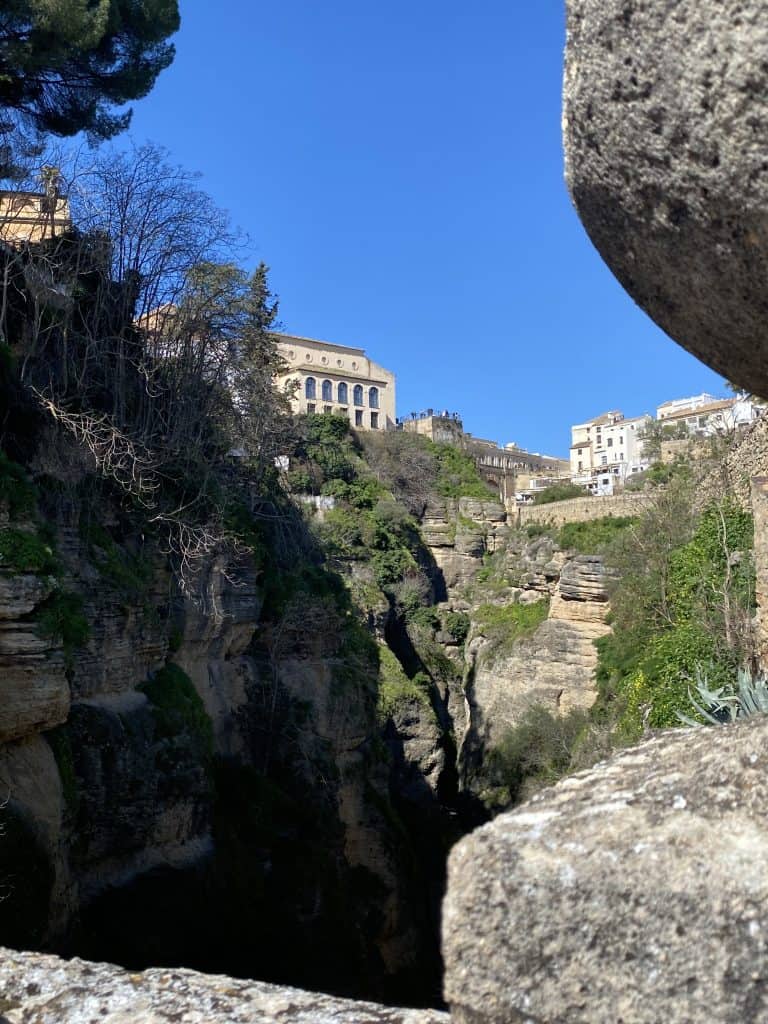
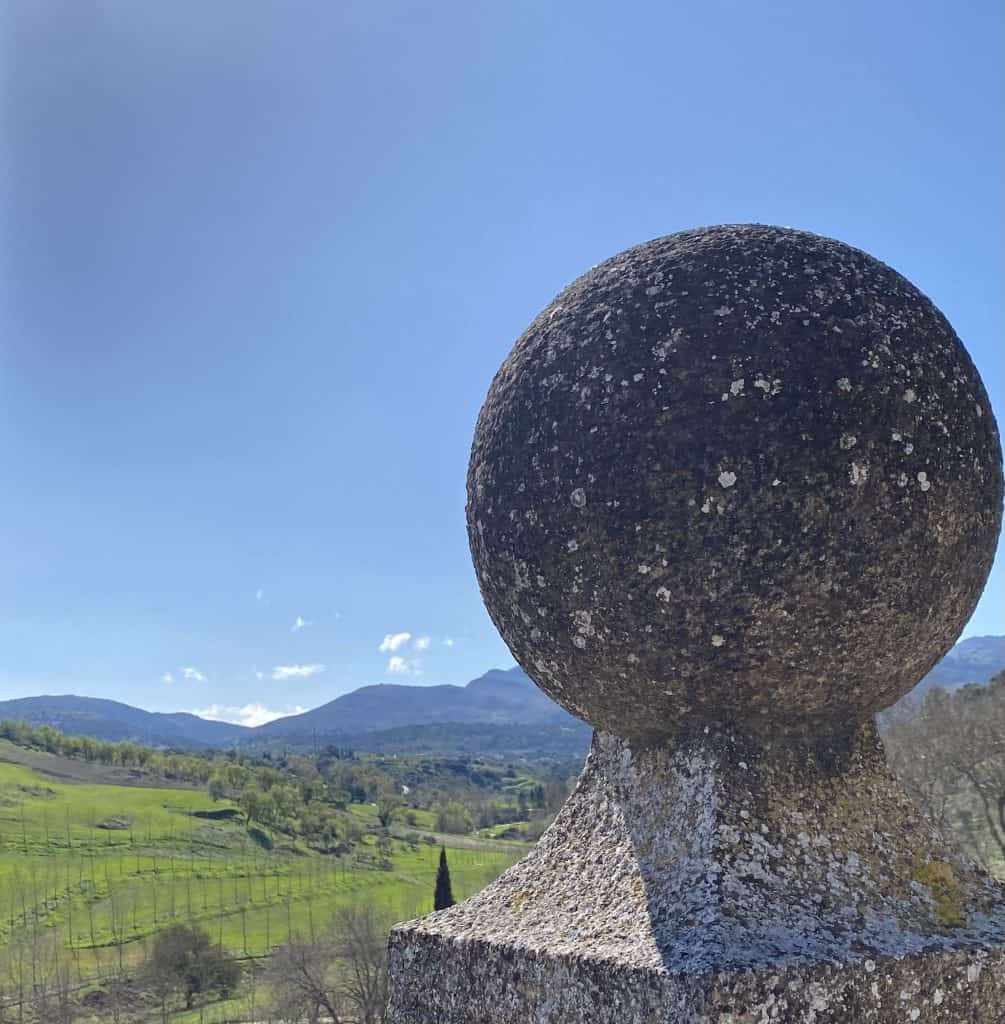
I was really impressed with the views from this bridge, especially the bright green rolling hills in the background.
Puente Romano (also known as Arab Bridge or San Miguel Bridge)
Despite the confusion on the name of Puente Viejo (the old bridge), Puente Romano is actually the oldest bridge in Ronda. It was built in the 13th – 14th centuries. It’s only 12 meters from the El Tajo Gorge and the Guadalevín River below. It’s made completely of stone and in current day is for pedestrians only. This bridge is close to the Arab baths if you plan to visit those as well.

Standing on each of these bridges in Ronda, Spain takes you back in time. It allows you to appreciate how each bridge played a role in Ronda’s history and continues to connect the two sides of the city. I highly recommended enjoying the views, the architecture and the historical significance of each of these bridges in Ronda, Spain.